Webinar on plant breeding and NGTs: citizens discuss the future of our food (Hungary)
On 20 January 2026, the Hungarian Living Labs (Leg-Hung and Cer-Hung) organised an online webinar as part of DIVINFOOD Task 4.4 – Citizen participatory foresight on plant improvement of NUCs.
Titled “All you need to know about breeding and NGTs: for organic farmers, millers, bakers, and consumers”, the event was co-organised by ÖMKi, Agri Kulti and TVE. It brought together farmers, bakers, researchers and citizens to explore how plant breeding — past, present and future — shapes our food systems.
The first part, led by Dr. Mária Megyeri (ÖMKi), provided an overview of plant breeding from domestication 10,000 years ago to modern molecular tools. The presentation highlighted traditional methods (selection, crossbreeding, heterosis), modern approaches (marker-assisted selection), the role of gene banks, and the diversity of variety types — from landraces to organic heterogeneous material. A central message was clear: nearly all plant-based food relies on long-term human-directed selection, and conserving genetic diversity is essential for future resilience.
The second part, presented by Judit Fehér, focused on New Genomic Techniques (NGTs) and the ongoing EU regulatory debate. Participants explored the differences between conventional breeding, gene editing and GMOs, the proposed NGT-1 and NGT-2 categories, and concerns related to risk assessment, environmental impacts and patents. The discussion emphasised that technological precision does not automatically guarantee sustainability and that policy choices will significantly influence agrobiodiversity and seed sovereignty.
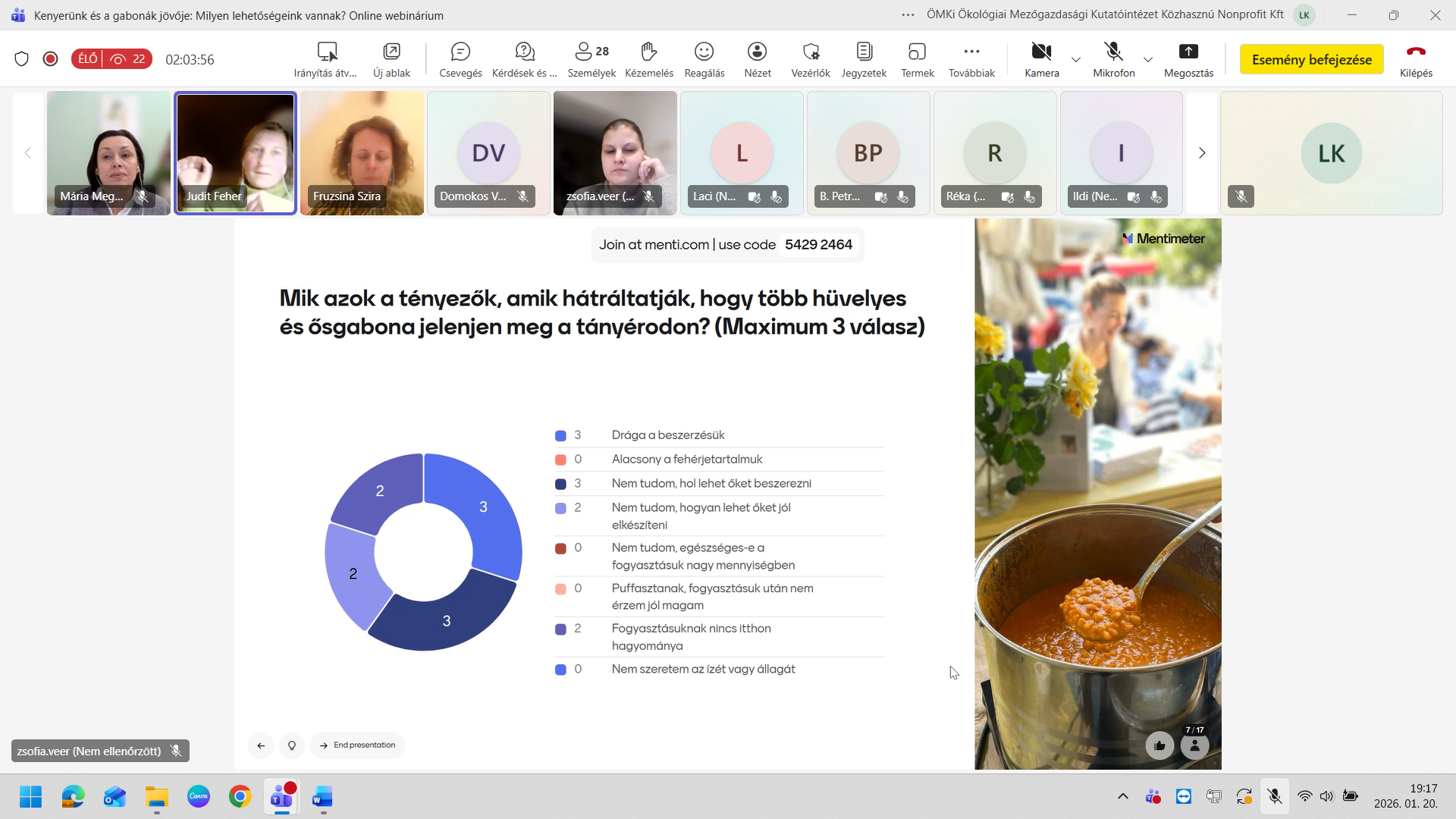
Interactive polls invited participants to imagine what we might eat in 2040, how often legumes and ancient grains could appear on our plates, and what messages should be addressed to breeders and EU policymakers. The exchanges highlighted strong interest in diversified diets, better access to underutilised crops, and coherent policies supporting agroecological breeding.
The webinar reinforced DIVINFOOD’s commitment to connecting breeding innovation, food environments and citizen perspectives — ensuring that the future of our bread and cereals remains rooted in biodiversity, transparency and informed public debate.
Leave a Reply