
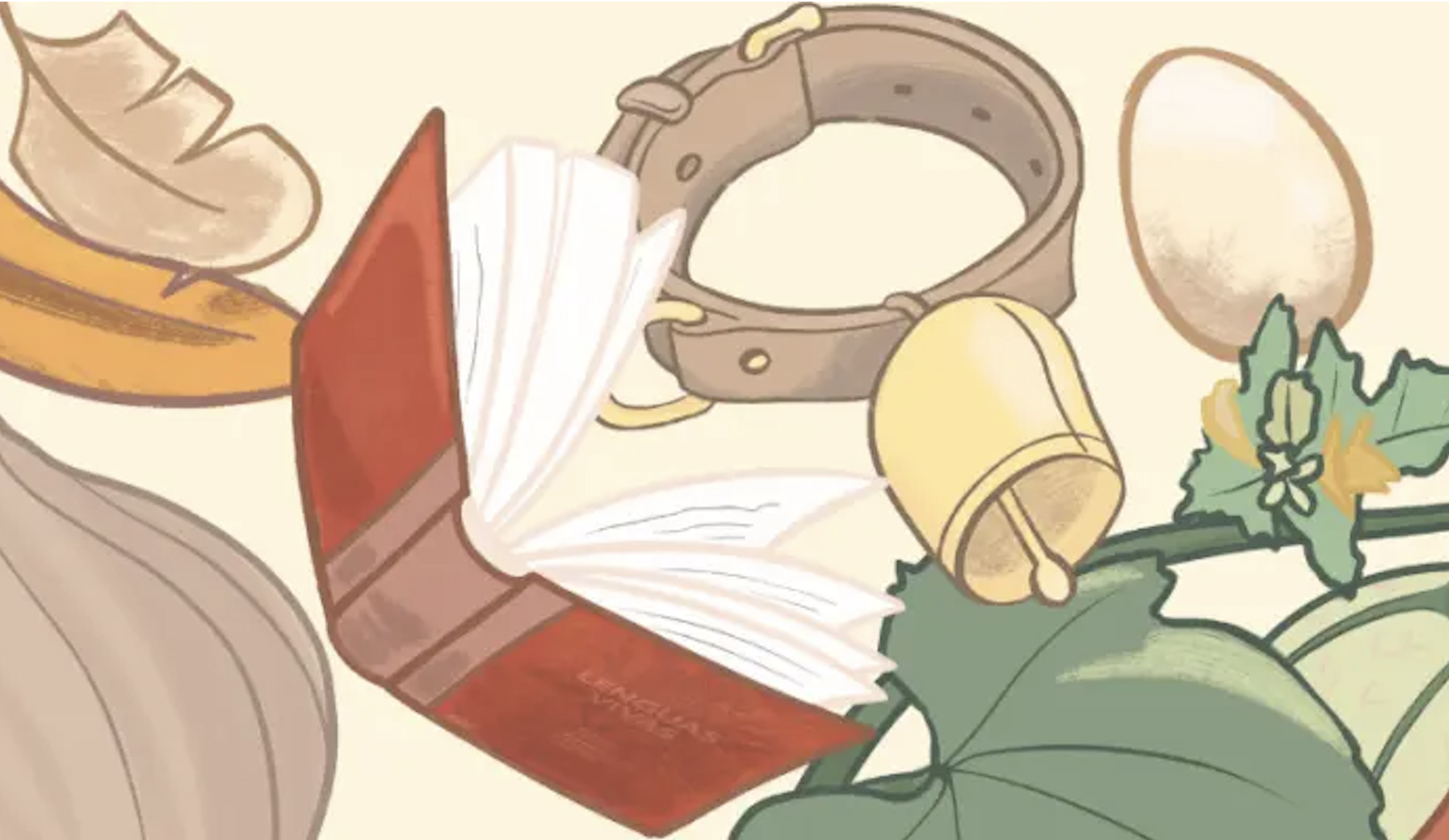
Seminar “Endangered Varieties, Breeds and Languages: What Futures?”
On June 2 and 3, 2026, Montpellier hosted the seminar “Endangered Varieties, Breeds and Languages: What Possible Futures?”, an original and interdisciplinary event dedicated to the links between agrobiodiversity and linguistic diversity. Organized by INRAE, PEN Occitan, and Agropolis International in connection with the European DIVINFOOD project, and within a Science and Society approach, the event brought together farmers, citizens, students, associations, researchers, artists, and public stakeholders around a shared reflection on threatened living heritage.
The aim of the seminar was to bring together perspectives on issues that are often studied separately: on the one hand, the preservation and promotion of local and traditional plant crops and animal breeds, often sidelined in favor of standardized varieties or breeds considered more profitable and better suited to long supply chains; and on the other hand, minority or endangered languages, which face similar pressures, dominated by a few major languages concentrating economic and cultural power. Discussions highlighted the common mechanisms driving the erosion of these forms of diversity: the standardization of economic and cultural models, the concentration of investment, the marginalization of local knowledge, and the gradual loss of connections between territories, cultures, and biodiversity.
This biological and linguistic diversity constitutes an irreplaceable resource. So-called minor crops and marginalized livestock systems embody knowledge adapted to specific territories, refined interactions with living systems, and strong local identities. Likewise, minority languages convey worldviews, knowledge, and modes of thought that are unique and constantly evolving. These two complementary and vital forms of diversity reflect a shared commitment and call for a new societal model.
Beyond diagnosis, the seminar identified concrete avenues for action: support for local agricultural sectors and diversified small-scale farming, participatory management of genetic resources, intergenerational transmission of regional languages, citizen involvement in research and development projects, and new forms of mediation between science, the arts, and society. Participants stressed the need to make these diversities visible across space and time, to assess the impact of their disappearance, and to actively support their vitality.
The event also placed strong emphasis on cultural and artistic dimensions. The half-day program “Sow the Words, Speak Diversity” offered the general public an original way to discover the Montpellier Botanical Garden through cultivated biodiversity and regional languages. Participatory workshops, a mobile museum, urban installations incorporating “word seedlings,” seed mandalas, storytelling and songs inspired by troubadours, as well as an evening of Occitan music and dance, concretely illustrated the richness of living heritage and its ability to bring citizens together around a shared project.
The seminar concluded with the drafting of the Montpellier Manifesto, the first manifesto on linguistic diversity and agrobiodiversity. Supported by citizens, researchers, and cultural actors, this text affirms that the revalorization of plant crops, marginalized livestock systems, and minority languages addresses a common challenge: keeping alive the multiple ways of inhabiting, understanding, and transmitting the world. A collective publication combining science and art is also planned following the seminar, with the aim of extending these exchanges and strengthening collaboration among participants in a creative and accessible perspective for the general public.
Through the diversity of its participants, the richness of its discussions, and the originality of its activities, the seminar “Endangered Varieties, Breeds and Languages: What Possible Futures?”created a unique space for dialogue and co-construction and represented a key milestone in the momentum of the French DIVINFOOD Living Labs.
Leave a Reply