
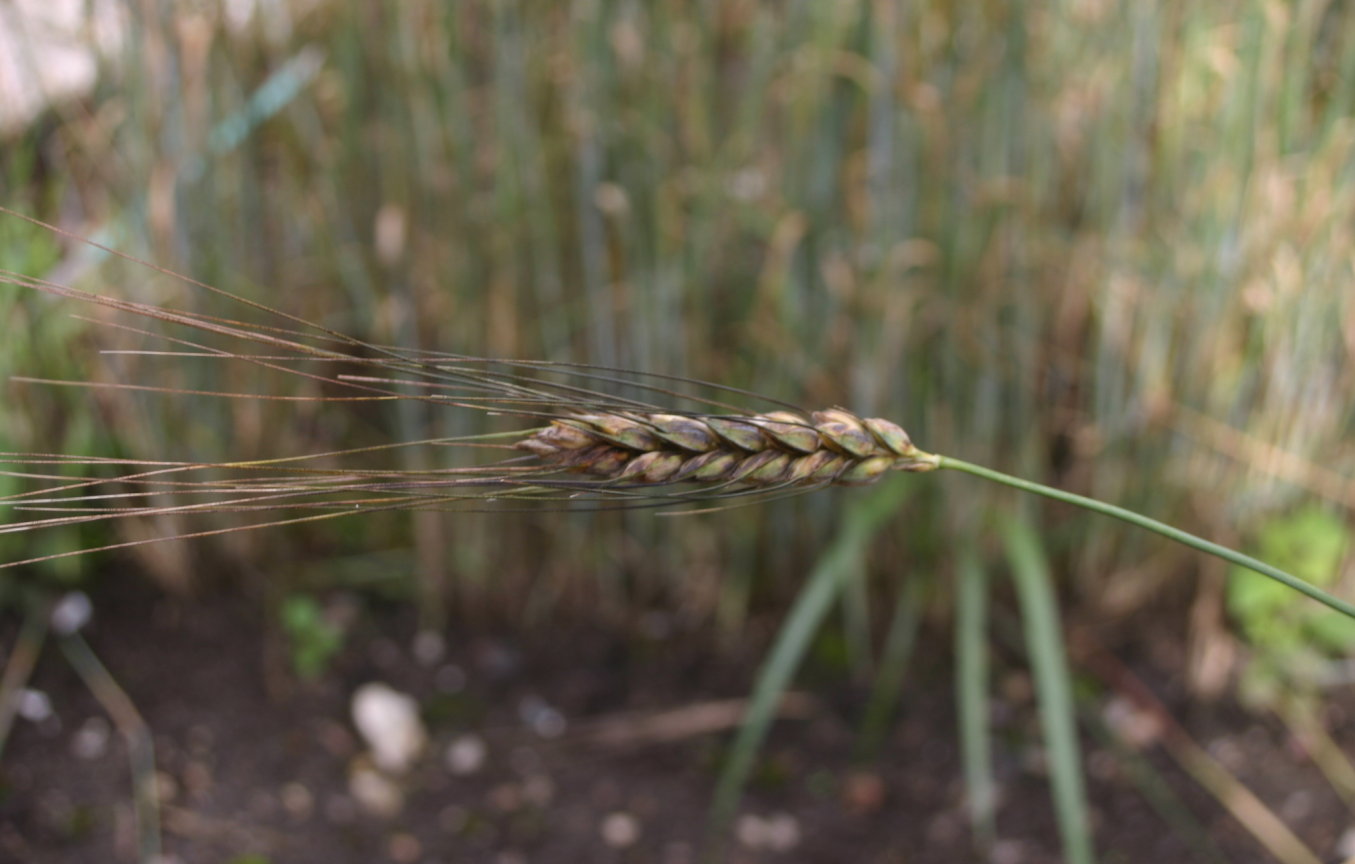
Rivet wheat: agronomic lessons from an ancient yet very modern cereal
In The Conversation France, Marie-Hélène Robin (Purpan / INRAE) explains why rivet wheat, an ancient relative of durum wheat, deserves a second look, and how DIVINFOOD research in Occitanie is exploring its potential.
A handful of crops dominate our fields: wheat, barley, maize, rapeseed and sunflower cover 83% of arable land in France. Minor crops, grown for centuries, now occupy less than 20,000 hectares. Yet in a context of climate change and dependence on pesticides, they are attracting new interest. Including them in rotations helps break pest cycles, and they need little fertiliser. Their genetic diversity also gives them more resilience in difficult conditions, even if yields are lower.
Rivet wheat (blé poulard) is one of these ancient wheats. It has a naked grain and a hard kernel, and was grown across Europe in the early 19th century, notably in cold and mountainous areas. It is well suited to poor soils. It also comes with constraints: long awns that make threshing difficult, sensitivity to lodging on rich soils, modest yields (2 to 2.5 tonnes per hectare) and a gluten that suits mechanical bread-making poorly. Its comeback rests on good performance in organic farming, nutritional qualities and outlets in artisanal pasta.
The article describes how the DIVINFOOD project, in Occitanie, studies rivet wheat and einkorn-type ancient cereals together with farmers, in partnership with L’Odyssée d’engrain, a cooperative of farmers and consumers making local organic dry pasta. The research looks at four dimensions: agronomy and plant health, nutrition (including a method to analyse protein profiles, with a view to wheats suited to people sensitive to gluten), technology (varieties best suited to pasta) and sensory quality.
A good example of participatory research turning neglected crops into concrete food chains.
Read the article: The Conversation, 13 October 2026 (in French): https://theconversation.com/connaissez-vous-le-ble-poulard-les-lecons-dagronomie-dun-ble-ancien-pourtant-tres-moderne-293148
To cite: Robin, M.-H. (2026). Connaissez-vous le blé poulard ? Les leçons d’agronomie d’un blé ancien pourtant très moderne. The Conversation. https://doi.org/10.64628/AAK.fwuse5e9j
Author: Marie-Hélène Robin, Purpan School of Engineering / INRAE UMR AGIR.
Leave a Reply